The snack coding challenge: fast lines, flexible film
Snack production is built for volume. A crisp line can run thousands of bags an hour; a stick-pack machine fills sachets in a blur. And almost every snack format – flow-wrapped bars, pillow bags, stick packs, sachets, laminated pouches – is packed in flexible film or foil. That’s great for shelf life and cost, but it makes coding harder than printing onto a rigid bottle or can. Film moves and flexes, it’s often glossy or metallised, and it can be heat-sensitive.
A code that smudges, rubs off, or pierces the film isn’t just untidy – it can compromise the pack and fall foul of food-labelling rules.
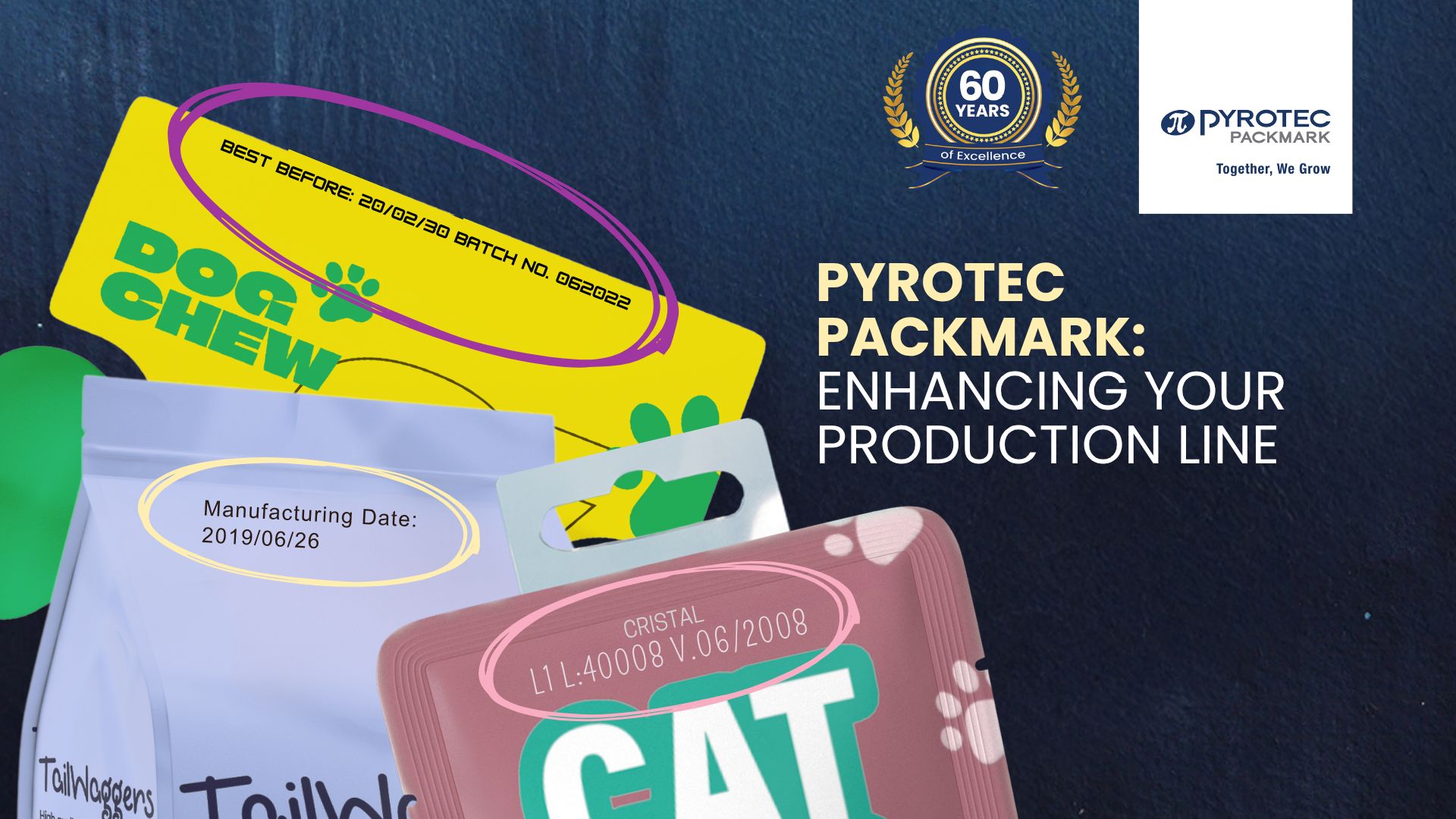
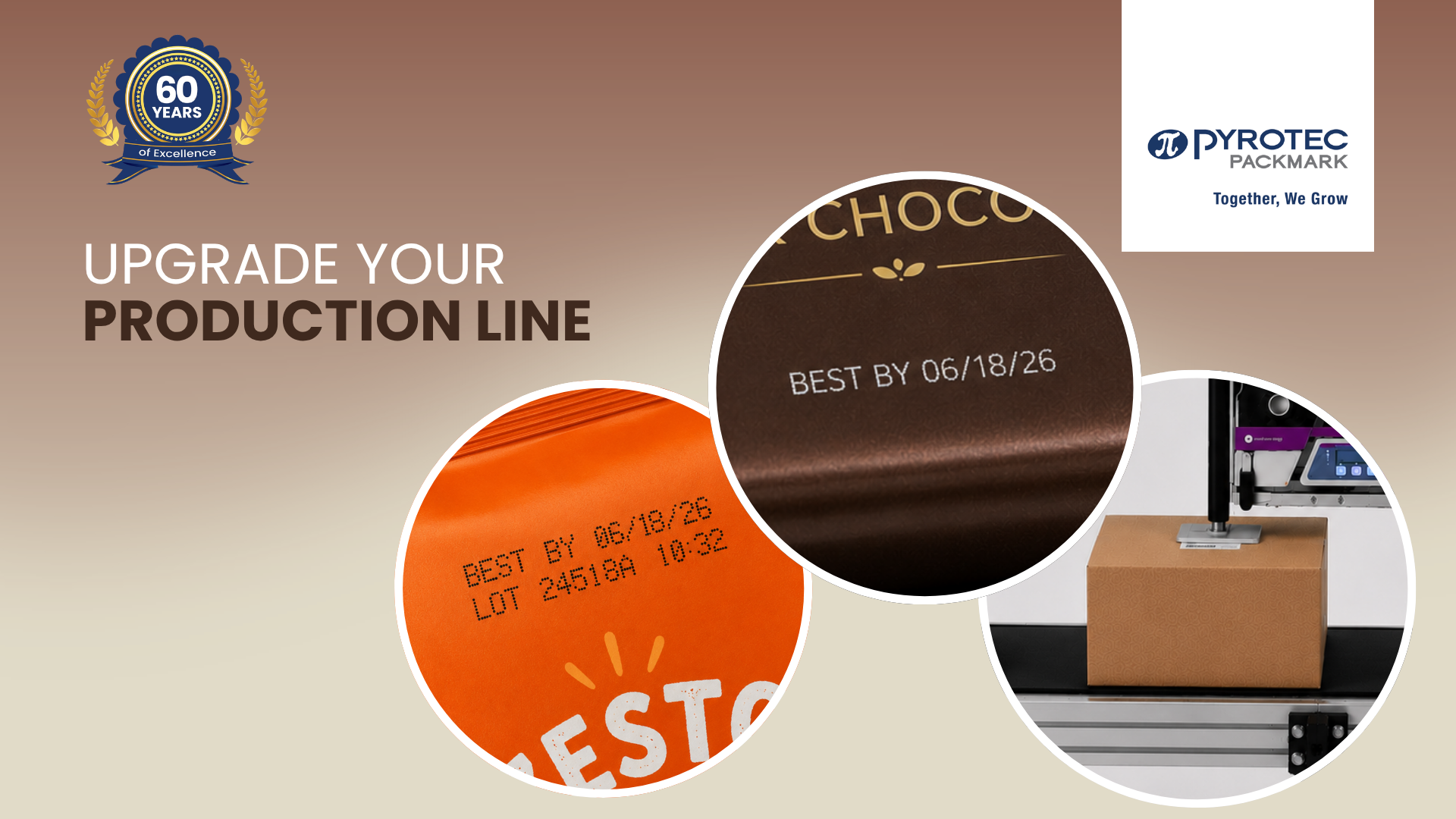
Every snack pack still needs a clear best-before date, batch code and often a barcode – for food safety, traceability and retailer compliance. The job is to print those marks cleanly, at full line speed, onto a moving flexible surface, shift after shift. That’s the specialty of Pyrotec PackMark.
Laser coding: the clean, consumable-free choice for film
For coding onto flexible films and foils, laser coding has become the snack industry’s favourite for good reasons: there’s no ink, so nothing to smudge, dry out or run out, and the code is permanent.
The SmartLase C350 is purpose-built for exactly this. It codes onto stick packs, pouches and wide webs, including multi-lane applications, and – crucially for snacks – it delivers promotional-quality coding on a wide range of coloured foils and films with no risk of piercing. Its dedicated fume extraction keeps the working environment clean and odourless, and its large coding area makes it well suited to the multi-lane stick-pack and sachet lines common in snacks.
Where you need coding flexibility across changing products and pack sizes, the TL30 handheld fibre laser coder offers portable, low-maintenance laser marking that’s easily customisable – a practical option for shorter runs, variable marking, or secondary coding tasks alongside a main line.

Inkjet still has its place
Laser isn’t the only answer. For many snack lines, continuous inkjet (CIJ) remains a flexible, cost-effective way to print dates and batch codes onto film at speed – particularly where you’re coding a variety of substrates and want one technology that handles them all.
The right choice between laser and inkjet depends on your films, your line speed, your code content and your budget, which is exactly the kind of decision a PackMark assessment is designed to get right.

Don’t forget the box: case coding for distribution
Snacks move in volume through distribution, and the outer cases need clear, scannable codes for warehousing and logistics. The Markem-Imaje 5940-G is a high-resolution piezo coder that prints compliant barcodes – including GS1-128 – directly onto cases, boosting throughput while improving traceability and brand protection.
For printing directly onto corrugated cases and trays without pre-printed labels, the Markem-Imaje 5800 large-character inkjet uses solvent-free Touch Dry® ink that dries on contact and won’t smudge through repeated handling.
And where cases or trays need labels applied at volume, the ALtech ALrobot robotic labelling system applies them accurately and consistently at production speed – keeping the end of the line moving as fast as the start.

Uptime is everything on a snack line
On a high-speed snack line, a stopped coder means lost production by the minute. Laser coders help here because they remove ink and solvent consumables entirely, cutting both maintenance and the risk of a code-quality fault stopping the line.
Whichever technology you choose, the support behind it matters: Pyrotec PackMark backs its coders with local technical support, genuine consumables and engineering expertise. For acquiring equipment without a large upfront outlay, Pyrotec Finance offers finance and rental options, and Pyrotec PackLink connects coding into smart-factory data systems as traceability requirements grow.
Frequently asked questions:
What’s the best way to code onto flexible snack film?
Laser coding is usually the best fit for flexible films and foils because it leaves a permanent mark with no ink to smudge or run out, and it can code coloured foils without piercing them. Continuous inkjet is also widely used and offers flexibility across many substrates. The right choice depends on your specific films, line speed and code content.
Will laser coding pierce or damage thin snack film?
A properly specified laser coder like the SmartLase C350 is designed to mark coloured foils and films without piercing them, by tuning the laser source, lens and settings to the substrate. Matching the laser to your film is part of the specification process.
How do I code the outer boxes my snacks ship in?
Case coding is handled by large-character or high-resolution coders such as the 5940-G or the 5800, which print dates, batch codes and GS1-compliant barcodes directly onto corrugated cases – no pre-printed labels needed.
Laser or inkjet for snacks – which is cheaper to run?
Laser coders have a higher upfront cost but no ink or solvent consumables, which often gives a lower total cost of ownership on high-volume lines. Inkjet has a lower entry cost and great substrate flexibility. The best value depends on your volumes and substrates – a site assessment will give you a clear comparison for your line.
Running snacks on flexible film?
Book a PackMark assessment and we’ll match the right coding technology to your films, speeds and pack formats.